Fixing wobble and noise issues
Many wobble complaints trace back to the box, bracket, or downrod hardware, not the blades. We check the structure first, then balance and tighten as needed.
Serving Fairburn, Georgia & surrounding areas
Professional Ceiling Fan Installation
Get a fan that runs smoothly, stays tight to the box, and is wired the right way for your switches and controls. PDQ Electric LLC installs new and replacement ceiling fans for homes and businesses across our service areas.
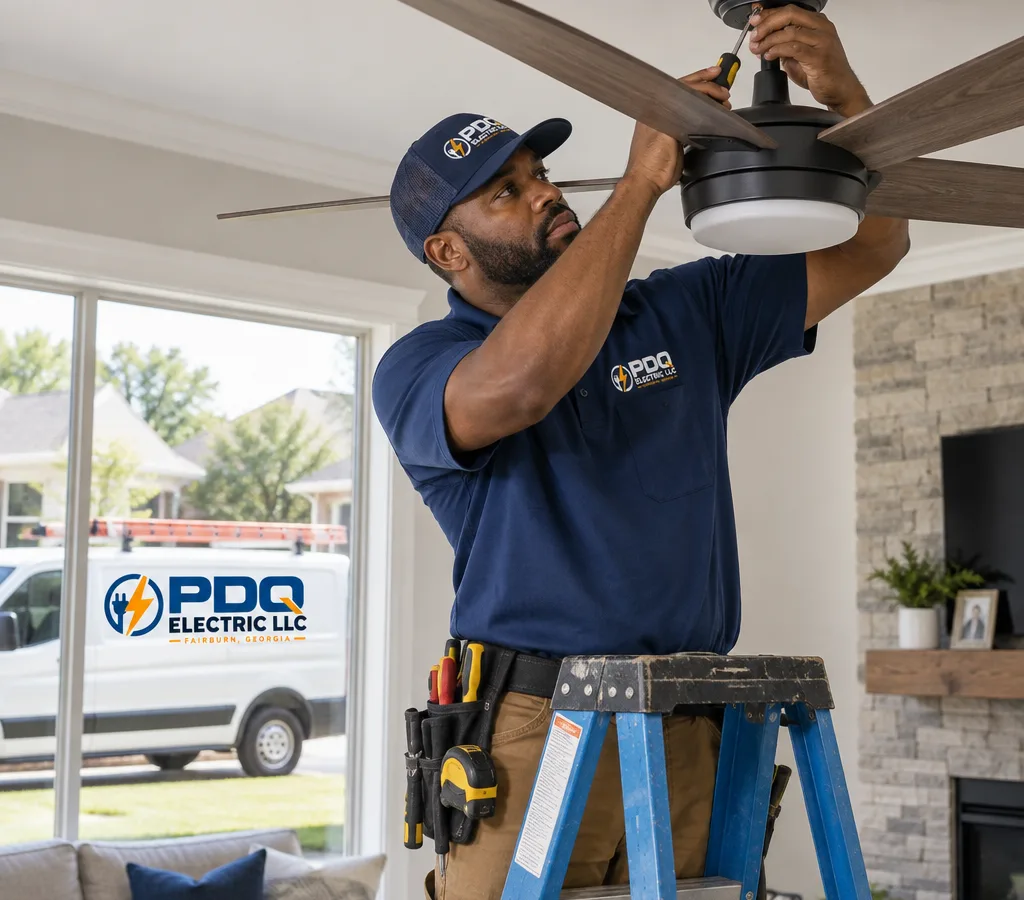
Secure mounting and correct wiring
Ceiling fan installation is more than hanging a fixture and turning the breaker back on. A safe install starts at the ceiling box, continues through the wiring and switch leg, and ends with a fan that is balanced, quiet, and secure.
When you hire PDQ Electric LLC for ceiling fan work, the job is approached like electrical work first and a finish item second. That means checking that the existing ceiling box is fan-rated—or replacing it with one that is—confirming cable and grounding, and making sure the fan is mounted to framing the way the manufacturer requires.
Common parts of the scope include:
Plan the right installation
Replacement installs can be quick when the existing fan-rated box, wiring, and switch setup are in good shape. The work typically focuses on safe disconnection, correct re-termination of hot, neutral, ground, and any switched conductors, and making sure the downrod, canopy, and bracket are tightened to specification.
New ceiling fan installation can involve more variables. If there is no existing ceiling fixture, the job may require adding or verifying a fan-rated box, confirming a safe cable path, and making sure the switch leg and wall box are appropriate for the control you want.
Either way, ceiling fan installers should plan around the realities of the room. Across our service areas, we work in a mix of newer builds and older homes, and ceiling height, attic access, and whether the fan is over a stairwell or open foyer can all change the setup and labor.
Before any work begins, PDQ Electric LLC will confirm the mounting method, control plan, and what will be reused versus replaced so the scope is clear.
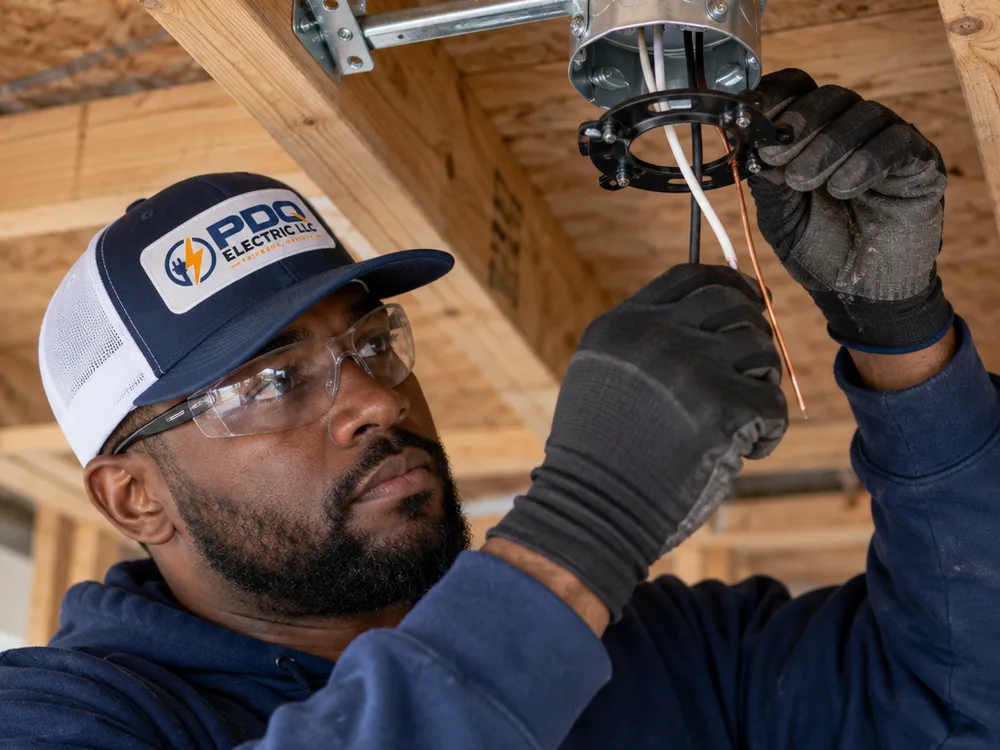
Installation details that matter
Many wobble complaints trace back to the box, bracket, or downrod hardware, not the blades. We check the structure first, then balance and tighten as needed.
We wire for your preferred control method and verify the fan's included receiver, dimming, and speed control are compatible with the fan's motor and light kit.
Stairwells, vaulted ceilings, and tall foyers change ladder access and safety planning. We account for access so the fan is mounted securely and finished cleanly.
If you have a covered porch or patio, the fan and electrical connections must match the location's exposure. We verify the rating and mounting details.
We install fans in offices and light commercial areas where airflow matters, while keeping wiring and controls neat and serviceable.
From planning through final testing
We start by reviewing the fan type—standard, low-profile, or downrod—whether there is a light kit, and how you want it controlled: single switch, separate switches, wall control, or remote.
Power is shut off and verified. We inspect the existing ceiling box and support. If it is not appropriate for a ceiling fan, we discuss the correct fan-rated option before moving forward.
Connections are made per the fan's diagram and existing switch legs. The bracket and canopy are secured, the fan is hung, and all hardware is torqued and locked per the manufacturer's instructions.
We verify fan speeds, direction, and light operation. If the fan includes a remote module, we pair and test it so you are not left guessing how it works.
We re-check wobble, listen for rubbing or clicking, and confirm the fan is stable at each speed. The work area is left tidy and the installation is ready for everyday use.
Planning your installation
Ceiling fan installation typically ranges from about $175 to $600 per fan for straightforward swaps, while installs that need a new fan-rated box, new switching, or difficult access such as vaulted ceilings or stairwells often run $350 to $1,200+.
Your final price depends on whether the existing ceiling box is fan-rated, the wiring and switch configuration, ceiling height and access, and whether the fan includes a remote receiver or specialty mounting. Exact cost is confirmed after an on-site look at the box, wiring, and location.
Book Your Free Inspection“PDQ did a great job swapping out a chandelier in my foyer that has a 17 foot ceiling. They were very easy to talk to and kept me informed leading up to the appointment. Pricing was also very reasonable. Very respectful of my home and did a great job making sure no mess left behind. Will definitely reach out to them for future projects.”
“Quincy is knowledgeable, professional, yet friendly, and reasonably priced. I would definitely recommend and use his services again.”
“I had the pleasure of working with PDQ Electric and the service was awesome! The tech arrived on time which was a major plus. He was very knowledgeable with the installation of my security cameras. Extremely professional and his pricing was very fair. I will definitely be using their service again.”
Helpful answers before installation
A ceiling fan should be mounted to a fan-rated box and correct support, not a standard light-rated box. If your existing box is not fan-rated or is loose, PDQ Electric LLC can replace it with a fan-appropriate mounting option before the fan goes up.
Yes, as long as we can provide a safe power source, switching, and proper fan-rated mounting at the ceiling location. The exact approach depends on access above the ceiling and how your home is wired, which we confirm on site before work starts.
You can keep one switch if you are fine controlling fan and light together at the wall, then using pull chains, a remote, or a wall control for separate functions. Separate fan and light wall switches require the right wiring between the ceiling box and switch box, which is not always present in older setups.
No. Wobble often comes from a loose or incorrect mounting box, an under-tightened bracket, or a downrod or hanger issue. Blade balancing can help, but the first step is confirming the fan is supported properly and all hardware is tight.
Most straightforward replacements take about 1 to 2 hours per fan, assuming the box and wiring are suitable and access is normal. Jobs that require replacing the ceiling box, changing controls, or working on tall ceilings can take longer.
Yes. PDQ Electric LLC is licensed under EN215437.
Have the fan on site, including any downrod lengths, remote receiver, and mounting parts that came in the box, and decide how you want it controlled at the wall. If the fan will be installed on a tall ceiling or above stairs, mention that when scheduling so access is planned correctly.
Ceiling fan installation service area
Choose your city to learn more about our local electrical service, or contact us for an estimate.
Tell PDQ Electric LLC where the fan is going, whether it's a new install or a replacement, and how you want it controlled. We'll confirm the mounting and wiring plan and get you a clear scope before work begins.