A real load plan, not guesses
We walk through the circuits and equipment you care about during an outage and translate that into a generator and transfer setup that matches your goals.
Serving Fairburn, Georgia & surrounding areas
Professional Generator Installation
Get a clear plan for placement, permits, electrical hookup, and start-up testing so your home backup power works the day you need it.
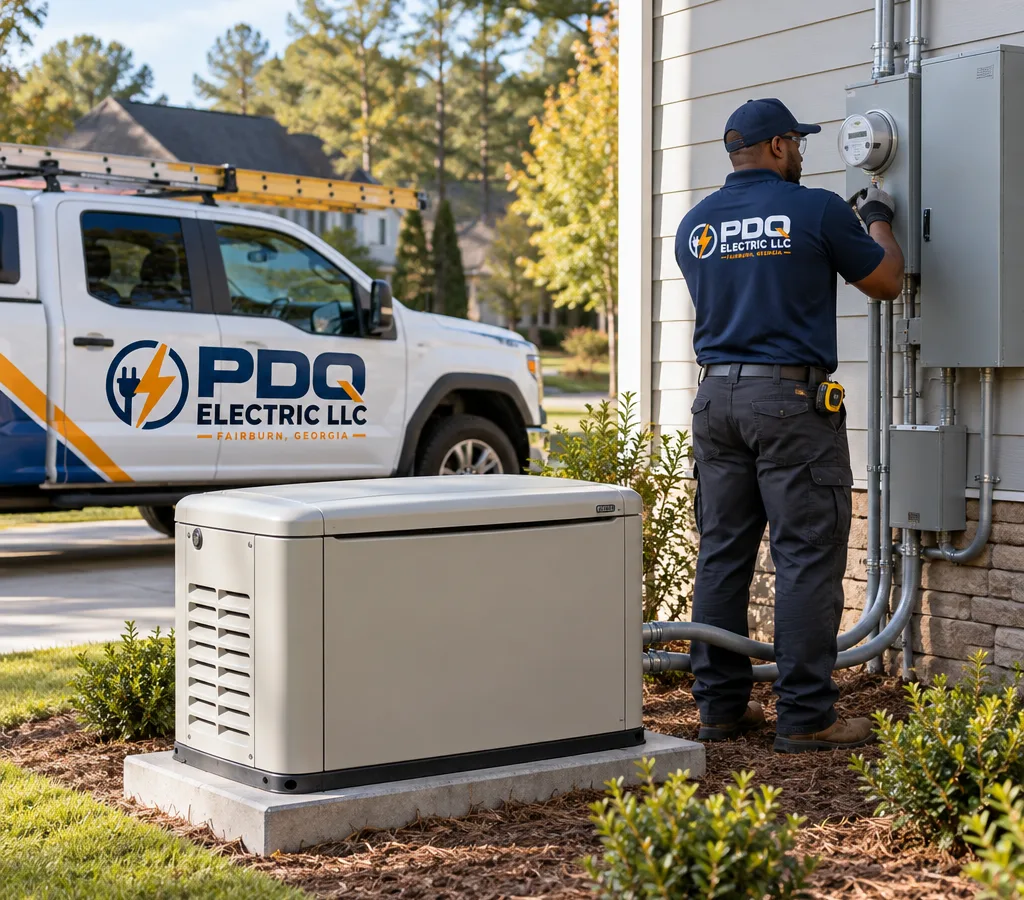
Home backup power planning
When the power goes out, the difference between a generator that “should” work and one that actually carries your home is the installation. PDQ Electric LLC provides backup generator installation focused on code-compliant electrical work: planning the tie-in, coordinating the shutdown steps, and verifying the system under load before we leave.
Most projects start with a conversation about what you want to run during an outage—HVAC, well pump, refrigerator circuits, internet, medical equipment, or garage doors. From there, we help you map a practical scope for whole house generator installation, including generator placement, transfer switch selection, and the electrical path from the service equipment to the generator.
PDQ Electric LLC provides generator installation and other residential electrical work across our service areas.
Installation details that matter
We walk through the circuits and equipment you care about during an outage and translate that into a generator and transfer setup that matches your goals.
Generator installation is built around how your existing main panel and service disconnect are arranged, so the changeover works correctly and stays accessible.
We plan for required labeling, disconnecting means, and clear circuit identification so the finished install is easy to operate and maintain.
Conduit, conductors, grounding and bonding, and terminations are done neatly and with serviceability in mind.
After hookup, we verify transfer operation and basic run behavior and show you the shutdown and reset steps you should know.
Site-specific generator planning
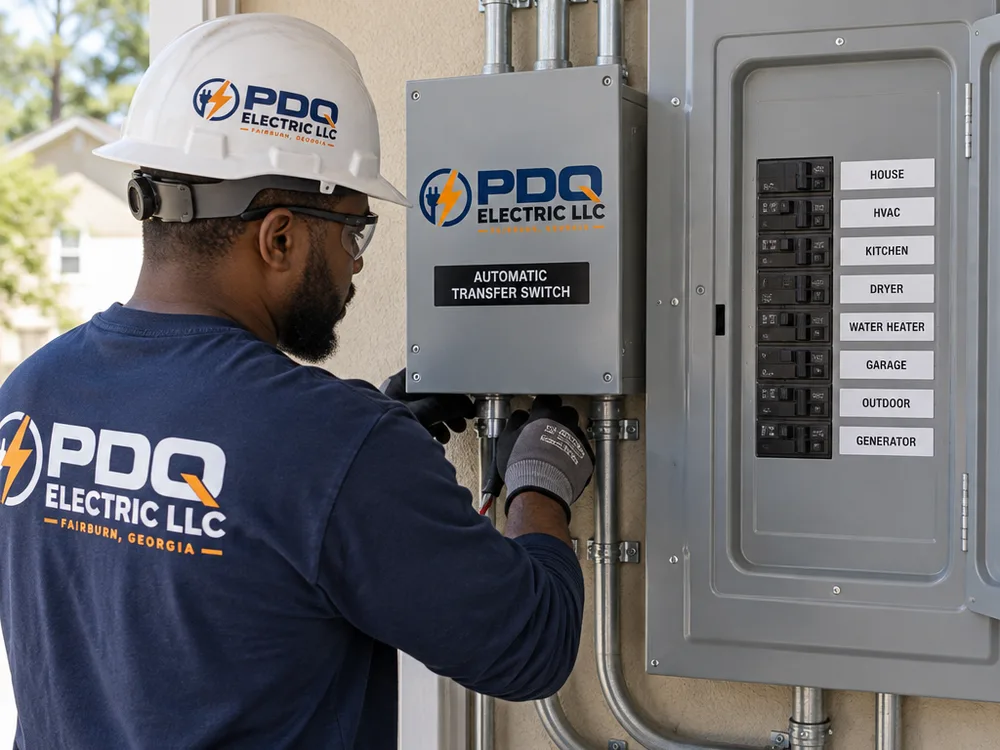
Generator placement is not only about where it looks best. It affects the electrical route, service access, and how easy it is to troubleshoot later. For most homes, the cleanest installs keep the generator close to the service equipment so the feeder run stays direct and protected.
During a site visit, we look at:
If you are already planning other electrical changes that affect generator tie-in, such as electrical panel upgrades, it is smart to coordinate the scopes so the generator installation is sized and landed correctly the first time.
From site review to handoff
We review the home's electrical service, discuss what you want backed up, and confirm where the generator and transfer equipment can go. You get a written scope that matches the installation approach.
We coordinate the electrical portion of the project around local permitting and inspection requirements and align the work with any other trades involved, such as gas piping, when applicable.
We install the transfer switch or transfer equipment, complete the required wiring changes at the service equipment, and ensure grounding and bonding are handled correctly for the installation type.
We land the generator feeder and control wiring, label circuits, and verify that the selected loads and transfer configuration match the plan discussed at the start.
We test transfer operation and basic run behavior, then walk you through the key operating steps so you know what normal looks like and what to do after an outage.
Planning your investment
Whole house generator installation typically ranges from $4,000 to $12,000+ for installation labor and electrical materials, with the generator unit priced separately. A simpler install with a short run to the service equipment and straightforward transfer gear usually lands on the lower end, while longer conduit runs, service-equipment changes, or more complex load management can push costs higher.
Your final price depends on generator size, transfer switch type, distance from service equipment, existing panel condition, required permits and inspection steps, and any corrections needed to meet code. Exact pricing is confirmed after an on-site assessment of your electrical service and placement options.
Book Your Free Inspection“PDQ did a great job swapping out a chandelier in my foyer that has a 17 foot ceiling. They were very easy to talk to and kept me informed leading up to the appointment. Pricing was also very reasonable. Very respectful of my home and did a great job making sure no mess left behind.”
“Quincy is knowledgeable, professional, yet friendly, and reasonably priced. I would definitely recommend and use his services again.”
“I had the pleasure of working with PDQ Electric and the service was awesome! The tech arrived on time which was a major plus. He was very knowledgeable with the installation of my security cameras. Extremely professional and his pricing was very fair.”
Helpful answers before you book
Yes, a whole house generator installation requires transfer equipment that isolates your home from the utility during an outage, and an automatic transfer switch is the most common approach for standby systems. The exact type—service-rated or panel-side—depends on how your existing service disconnect and main panel are configured. PDQ Electric LLC confirms the correct transfer method during the site review so the installation matches code and the way your home is wired.
Often yes, but an older or crowded panel can change the plan for generator installation. In some cases, the right solution is to rework circuits, add properly sized space for breakers, or replace service equipment so the transfer setup can be installed cleanly. We evaluate the panel condition and available capacity first so you are not committing to a generator without a workable tie-in path.
Most generator installation work is completed in 1 to 2 days once the equipment, permits, and any other trade work are ready. Timing depends on the length of the electrical run, whether service equipment needs modifications, and inspection scheduling. After the on-site assessment, we can give you a realistic schedule for the electrical portion of the project.
It can, but it depends on generator size, starting loads, and how the load is managed. Many homes need a plan that accounts for HVAC starting current and prioritizes what runs together during an outage. As backup generator installers, we focus on building a load plan around the way you actually use the home, then wiring the transfer configuration to match that plan.
At start-up we verify correct transfer operation, confirm that selected circuits energize as intended, and check for basic issues like incorrect phasing, loose terminations, or labeling gaps that make operation confusing later. We also walk you through the key steps you should know, including what to do if the system needs to be reset after an outage.
Yes. PDQ Electric LLC is licensed in Georgia (EN215437), and we perform generator installation as electrical work that must meet applicable code and inspection requirements.
Generator installation service area
Choose your city to learn more about our local electrical service, or contact us for an estimate.
Share what you want to power during an outage and what type of home you have. PDQ Electric LLC will help you choose a practical installation approach, confirm placement and transfer options, and provide a written scope for your backup power setup.